
Hogwarts Clubs
You are sorted into one of the four Houses. That is done to you, in your first eleven seconds, by a hat. A Club is the opposite: you choose it. Clubs are player-founded, cross-house societies layered on top of the Houses: a smaller, voluntary band with its own clubhouse, treasury, ranks, wars, and rankings. A Hufflepuff and a Slytherin who would never share a common-room sofa can co-found the same Club and bicker over its upkeep instead. Your House is your blood; your Club is your business. (A Club is never a "clan" and never a "House." The legacy clan system is the Houses. This is the other thing.)
What a Club Is
A Club is a chartered group you belong to in addition to your House. You may belong to exactly one at a time, and the game enforces this, which is the magical equivalent of a velvet rope. A Club has a name (3–64 characters: letters, numbers, spaces, apostrophes, dashes, dollar signs, and color codes are all permitted, so you may render yourself the Scarlet whatever you please), a tag (exactly 3 plain letters or numbers, with no color codes; the form will say so rather than quietly eating them. It must be unique across every Club, and it is off-limits if it would collide with a House's own tag: GRY, HUF, RAV, or SLY are reserved for the Houses and cannot be claimed), an optional custom color, a motto, a roster, a shared clubhouse, a treasury, a power score, a governance model, diplomatic relations, and an unhealthy interest in beating other Clubs at things.
Your standing inside a Club is shown on your bio: the Club's name and tag, your rank, your loyalty tier, and any honorary title the President has decided you deserve. In chat, members show their Club's tag (in the Club's color) beside their name instead of their House tag, unless you choose otherwise. A preference on the Preferences page lets you switch back to showing your House tag instead.
Founding a Club
Founding is deliberately gated behind real progression: it is "reserved for the school's patrons," which is a polite way of saying it costs money. To charter a Club you must produce all of the following at once:
- 1,000 donator points (100 points = $1, so roughly $10; the Prefect's Lounge lists the Clubs office under Found or Upgrade a Club, for patrons who would rather start the paperwork where the points are kept)
- 500,000 gold, counted from hand and bank together
- 100 gems: hand only; the bank does not count here
- 7 Voldemort Encounters (VEs) minimum
That last requirement matters more than it looks. The gate is on Voldemort Encounters, not level. Level is experience-derived and resets every newday; VEs are permanent, accumulated proof you have actually survived the school. The code refuses a level argument on principle. You cannot grind a Club into existence between breakfast and lunch.
Before anything is charged, the charter office shows you a preview (your name, tag, and motto exactly as they will be saved, rendered the way the rest of the school will see them) and waits for a second signature. Nothing is spent until you confirm, on the reasonable grounds that 1,000 points is a great deal to pay for a typo.
A fresh charter arrives as a tier-1 Clubhouse with room for 5. You become the Club's Founder, which is a permanent chair of ownership, and you take the President's chair with it, which is not permanent at all (see Two Chairs, below). The charter also opens the treasury, which starts empty, in the way that treasuries do. The first upkeep bill does not arrive until the following week. Even goblins accept that a treasury cannot be in arrears before it has had a chance to contain anything.
Membership
There are two ways in: apply to a Club (its officers vote on you) or accept an invitation an officer sends you. Either way you arrive at the bottom rank, a Recruit, and pay the Club's membership fee on entry. If you cannot cover the fee, the join is silently rolled back. The Club is not a charity, and the ledger has no sense of occasion.
A Club cannot accept you if its clubhouse is at capacity. Capacity is set by tier: 5 / 10 / 15 for Clubhouse / Manor House / Castle.
Leaving is permitted, but it has teeth. Departing, whether voluntarily or by disbanding your own Club, resets your loyalty to zero and bars you from joining any new Club for 48 hours. Being kicked carries no such cooldown, on the reasonable theory that exile should not also come with a waiting list. If a President leaves, leadership passes to the most senior remaining member; if there is no one left, the Club quietly disbands.
The Message of the Day
Every Club has a Message of the Day, the same pinned notice the House common rooms have: rules, meeting times, standing grievances, the list of people who have not paid into the treasury. It sits at the very top of the Club page, above the tier, the treasury and the chat, credited to whoever last set it, so it is the first thing a member sees on arrival and remains so whether or not they read it.
Its virtue is stubbornness. Chat scrolls, and old comments are pruned by the ordinary workings of the world; the MotD is not chat and nothing prunes it. It stays exactly where it was put until an officer changes it, which is either the greatest strength of the feature or a warning about how long a typo can live.
Officers and the President may set it, via Update MotD in the Club menu. Color codes work, up to 4,096 characters, of which most Clubs need about forty. Saving an empty box takes the notice down. Anything resembling markup is displayed as plain text rather than obeyed, the school having learned to be firm about that sort of thing.
Ranks & Governance
Four ranks, in ascending order of being allowed to touch things:
| Rank | Can do |
|---|---|
| Recruit | Belong. Deposit. Talk. Little else. |
| Member | The same, with seniority and a vote. |
| Officer | Invite, accept, kick, promote, manage the clubhouse, send newsletters, declare war, conduct diplomacy, withdraw from the treasury. |
| President | Everything operational: governance, titles, disbandment (with the Founder's consent), role assignment, treasury distribution. The chair itself can change hands; see Two Chairs. |
On top of rank, the President may pin named role bits onto individual members: Treasurer, Recruiter, Herald, Warlord, Diplomat. Each of them grants one Officer-tier permission to a non-Officer. A loyal Member can be made Treasurer (treasury access) or Herald (newsletter rights) without being handed the full Officer key ring.
A Club runs under one of two governance models, set by the President:
- Appointed (the default, and the honest one): the President promotes and demotes officers by hand.
- Elected: members endorse candidates, one endorsement each, and the President closes the vote to seat them. The number of elected seats is one per 5 members (minimum one). Winners become Officers; everyone else who held a seat is returned to Member, and endorsements wipe clean for the next cycle. This track seats officers only; the President's own chair is a separate question, answered below.
Two Chairs: Founder & President
A Club has two chairs, and they are not the same chair. The Founder is ownership: the person who paid 1,000 donator points for the charter and keeps paying the clubhouse's bills. The President is operations: the rank that runs the club day to day. Founders start out holding both, and that is the last time the two chairs are automatically the same thing.
The Founder chair cannot be taken, argued with, or voted away. No election contests it, no officer can dismiss the Founder or demote them, and the Club cannot be disbanded without the Founder's own hand on the paper (a President who is not the Founder gets a polite refusal). If the Founder's own member record is deleted, the club does not dangle: the sitting President inherits ownership, or, if there is none, both chairs open up and the special election described below decides everything. A Founder who merely wants out uses Step Down as Founder on the Club Elections page: a sitting President inherits the ownership outright, the departing Founder becomes an ordinary member, and none of the protections travel with them.
The President chair is the contestable one, and whether it is contested at all is the Founder's decision. The elections toggle lives on the Club Elections page and answers to the Founder alone; officers cannot flip it.
- Elections on: every week, members may vote for any active member, Founder included, on the Club Elections page. One ballot per member per week, changeable until the tally. The tally is strict: a challenger needs more than half the valid ballots AND more than half the week's contributed weight (members' gold deposited that week). Fall short on either and the sitting President keeps the chair.
- Elections off: the President serves at the Founder's pleasure. The Founder may appoint or replace the President at will from the same page, and the officers toggle on the Governance page sits inert about the chair itself until elections resume.
Flipping elections off mid-week is not a subtle move: that week's ballots are discarded unread and the whole roster is told. The Founder who holds the presidency and steps down anyway vacates both chairs at once; the special election that follows uses its own ballot box, and its winner, decided by plain plurality, becomes President AND Founder, protections and all.
The President may also distribute treasury gold: half split evenly across the active roster, half weighted by this week's contributions, an owl to every recipient, and one atomic debit that cannot overdraw the coffer. It is the closest thing a Club has to a dividend, and it lands like one.
The Clubhouse
The clubhouse used to be a figure of speech. For a long stretch it was not a room at all, simply what your Club was, administratively, and this guide said so in print, right here. That has changed: the clubhouse is now a furnished room, decorated by whoever in the Club cares to pick up a paintbrush. The tier, the capacity, the treasury balance and the upkeep bill still live on the Club Page; the room itself has its own stop, the Clubhouse page, on the same menu. The same room also turns up as a picture on the Club Page, for any passerby, and, at each member's own discretion, on their public profile: a profile owner can switch their clubhouse card between Hidden (the default) and Visible from their own profile, which affects their profile alone and nothing about the Club itself. A visitor who is logged in also gets a short list of fellow members standing near the door. A visitor who is not logged in still sees the room, just no names. Its coffer and the club treasury are one and the same pot, managed from the Treasury page: one interface, one set of rules, one ledger. It comes in three tiers, each a step up in capacity and grandeur, and each a step up in what it costs to ascend. Upgrade costs are paid in donator points (by the upgrading officer) plus treasury gold and gems:
| Tier | Capacity | To reach it |
|---|---|---|
| Clubhouse (1) | 5 | Founding: 1,000 pts + 500,000 gold + 100 gems |
| Manor House (2) | 10 | 2,000 pts (~$20) + 900,000 treasury gold + 250 treasury gems |
| Castle (3) | 15 | 3,000 pts (~$30) + 10,000,000 treasury gold + 500 treasury gems |
Upgrading is an Officer-or-better act, and the Castle is the ceiling. Once you are a Castle there is, as the game puts it, "nowhere left to climb."
A clubhouse can become cramped if a downgrade ever leaves more members than the tier can seat. Cramped clubs suffer a defense penalty (a 0.9× multiplier) and cannot recruit until there is room. No one is ever evicted to fix this: the game would rather you all stand uncomfortably close than throw anyone out.
The tiers now shelter as well as house: members of a Manor enjoy a permanent +2% to attack and defense, and members of a Castle +4%, on the understanding that it is easier to duel well when one has slept somewhere with functioning windows. The perk is suspended while the club is behind on clubhouse upkeep specifically. Comfort is a subscription, and the goblins hold the receipt. (Unpaid Hogsmeade dues are a different failure with a different consequence: see Sovereignty, where the penalty is losing the territory itself.) The Club Page now also carries a trophy case (a section of the page, not the piece of furniture below): season championships, the war record (draws recorded as draws, the ledger being scrupulous about other people's mediocrity), and any Hogsmeade holdings. It renders nothing at all for a club with nothing to show, a kindness nobody asked for and everybody appreciates.
Presidents may also repaint: a new club name color and a separate chat tag color cost 500 donator points apiece, from the Club Colors page. Clearing back to the default is free, restoring the club to the dignity of plain text at no charge.
Beyond a single color, the President alone may also restyle the club name letter by letter, from the Restyle Club Name page: any mix of color, bold and italic, up to 12 codes total, for 500 donator points a change. The letters, numbers and spacing must stay exactly what they were; a restyle changes how the name looks, not what it says, and a genuine rename still means disbanding and founding again. Every candidate is previewed before anything is spent, and clearing back to a plain name is, as ever, free.
Decorating the Clubhouse
Any active member may furnish the room with their own gold, gems, or donator points, exactly as they would their own dorm; whatever they buy joins the Club's shared storeroom, for any other active member to place. An Officer, or a member holding the Treasurer role, may instead spend from the treasury, gold and gems only (the treasury holds no donator points, so a donor-only piece is always bought on a member's own coin), from the Clubhouse page off the Club menu. Either way, the piece belongs to the Club, not to whoever happened to be holding the purse that day.
Arranging the room, dragging pieces into place, happens on your own profile's edit page, under Decorate Your Clubhouse, the same desk your own dorm keeps its editor on. An ordinary member may remove only what they themselves set down; an Officer (or the President) may remove or rearrange anything, change the room's backdrop, and lock the layout entirely, so that only Officers may touch it, or spend the treasury on more furniture, for a Club that has had enough of its meeting table migrating six inches a day.
Room capacity grows with the clubhouse's own tier, same as everything else about it: a Clubhouse seats 40 pieces of decor, a Manor House 70, a Castle 100. Five pieces were made for the clubhouse specifically: a Club Couch, a Long Meeting Table, a Club Banner, a Trophy Case (furniture, sharing a name and nothing else with the record-keeping trophy case above), and a Notice Board. A bed, or a VIP member's own monthly collectible piece, is made for the dorm, and the clubhouse's own catalog leaves them off the shelf; neither can be dragged into the clubhouse room. The arrangement runs both ways: the five clubhouse pieces never appear in a personal dorm's shop or editor either, so nobody gets to take the couch home.
Shop for these on your profile (Clubhouse decor, for active members, are bought and arranged under “Decorate Your Clubhouse” on your profile's edit page, which the link opens. Signed out, it takes you to sign-in first.)
Clubhouses, furnished
Two rooms built from the clubhouse catalog. The club picks its room from the same seven the dorm sells, and a clubhouse has more use for a meeting table than a bed.
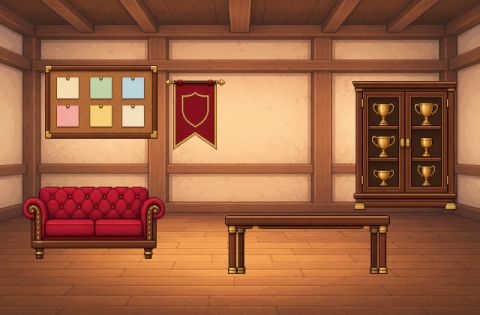
A clubhouse common room 
A clubhouse in the Tower Study
Clubhouse exclusives (5)
The five pieces that exist only here. Nobody gets to take the couch home.

Club Couch 
Long Meeting Table 
Trophy Case 
Club Banner 
Notice Board
Shared furniture (9)

Wooden Chair 
Oak Desk 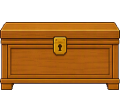
Oak Chest 
Tall Bookshelf 
Potted Fern 
Floor Lamp 
Brass Cauldron 
Glass-Front Bookcase 
Topiary Shrub
Rugs and floor decor (7)

Round Rug 
Long Runner 
Gryffindor Rug 
Hufflepuff Rug 
Ravenclaw Rug 
Slytherin Rug 
Woven Rug
Shared wall decor (8)

Star Poster 
Arched Window 
Gryffindor Banner 
Hufflepuff Banner 
Ravenclaw Banner 
Slytherin Banner 
Round Window 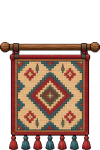
Woven Tapestry
Treasury & Upkeep
The treasury is the clubhouse coffer, the same pot, and the Treasury page is the only door to it. Any member may deposit gold or gems; deposits are tracked per member, and the biggest contributors are immortalized on a leaderboard for the benefit of everyone who isn't. The Treasury page also keeps a ledger of the last fifteen movements of money in or out: deposits, withdrawals, war aid, upkeep, liens, raid spoils. Each entry is dated and carries a name, because nothing in this school stays anonymous for long.
A solvent clubhouse gives back, too: every Voldemort Encounter a member survives pays them 100 gold × the clubhouse tier out of the treasury, provided the coffer can actually cover it, and doubled while the weekly cooperative goal's buff is running.
Withdrawing is harder, by design. You need the permission (Officer rank or the Treasurer role) and "earned bank access": a freshly promoted account must reach loyalty tier 1 before it can touch the coffer, which neatly defeats the time-honored scheme of funneling a Club's gold into a disposable alt. The President is exempt, because the President is the one most clubs were funneling toward anyway. Withdrawals are capped: 3 per member per day, up to 50,000 gold and 10 gems per transaction.
Upkeep is the quiet menace. Every week the clubhouse bills the treasury 10,000 gold × its tier (gem upkeep is zero). If the coffer can't cover it, the bill escalates: first a Gringotts lien on the banked gold of officers and the President (richest rank first), then, if that fails too, arrears. While a Club is in arrears its perks are suspended: notably, members stop receiving treasury payouts for Voldemort Encounters. Carry arrears past the grace period (2 periods) and the clubhouse is repossessed one tier: Castle becomes Manor, Manor becomes Clubhouse. Members are never deleted; the building just gets smaller, and so does everyone's elbow room. Arrears are not, however, a life sentence: the instant the coffer can cover what the clubhouse still owes, whether replenished by deposit, incoming war aid, or raid spoils, the goblins take exactly that (no more, no less), the arrears lift, and perks resume the same breath, no waiting for the next billing day. A Club that goes quiet for a month does not come home to a clean slate: the goblins keep a ledger of every week the clubhouse was neglected, and bill the backlog on your first day back, capped at the same grace window rather than the full stretch of your absence. Vanishing is not a billing plan.
Members may also donate donator points into the treasury, which keeps its own point balance beside the gold and gems. Club points buy boost weeks and club projects; they can be spent by officers but never withdrawn back to a player, which makes the donation a contribution rather than a deposit. The charge and the credit are one transaction, so a failed donation costs exactly nothing.
Deposits are atomic in general, as of this season: the gold, the coffer, and the ledger move together or not at all. Each deposit also fills your weekly contribution bucket, shown on the Treasury page. The bucket is what the enhanced contributor tier reads: reach 2,000 gold deposited in the current week and the venue perks below upgrade for you (most visibly, the Hog's Head stops selling you a drink and starts housing you). The bucket resets every Monday, the way resolutions do.
And the club as a whole can rent a little momentum: a boost week costs 200 donator points (an officer buys it, from their own balance) and gives every member +5% fight experience for seven days. Buying while one is running extends it another week rather than overlapping it. The Club page counts the days down.
Treasury Projects & Seats
A wealthy club can spend its gold on things that do not rust. Three permanent projects are available from the Treasury Projects page, commissioned by the President out of the treasury at 100,000 gold apiece. Permanent means permanent: the ledger's own key refuses a second purchase, which is the most reliable paperwork in the school.
- The Rookery: every member's gift inbox holds two more parcels before senders are turned away.
- The Study Hall: members earn +5% fight experience forever. It stacks with a boost week, because one is bought and the other is rented.
- The Buttery: the enhanced venue perks extend to every member, no contribution quota required. The house pour improves for everyone, which is the traditional function of a buttery.
The clubhouse can also squeeze in extra capacity seats: 25,000 gold each, up to five over the tier's own furniture. Seats are bought by the President and belong to the club, not the tier: upgrading to a Manor or being downgraded to a Charter never takes a bought seat away. New members are counted against the larger number everywhere capacity is read.
Hogsmeade Property Perks
Here is what sovereignty is actually for. Each Hogsmeade location a Club holds does something for its members, listed on the Sovereignty map and on the Club Page, and suspended (never silently promised) while the holder is in clubhouse-upkeep arrears:
- The Hog's Head: members drink free at the inn bar, one pour a day. Contributors of the enhanced tier also sleep free: the room is on the club. (The bed comes with the establishment's bodyguard arrangement attached, exactly as a paid room does. A free room is not a safe room; it is the same room, at a better price.)
- The Three Broomsticks: +3% attack and defense, comfort of the hearth.
- Honeydukes: members wake fully healed.
- Zonko's: one free firework chat effect a day.
- The Shrieking Shack: one extra Arena fight a day.
- The Owl Post Office: senders may send two extra free parcels a day.
- Hogsmeade Station: 10% off travel tickets.
- Scrivenshaft's: members may write in the shop's exclusive Sepia ink in chat, a color nobody else can use.
- Dogweed and Deathcap: a daily handful of potion ingredients.
- Gladrags: a tailoring suffix on the member's bio.
- McHavelock's: a hatter's line on the bio.
- Dominic Maestro's and Madam Puddifoot's: each unlocks a small emote in chat (a melody, a cup of tea) for members.
Ownership pays in the other direction too: when a non-member spends gold at a held venue (a drink at the bar, a grab bag at Zonko's), 20% of the price is routed to the holding club's treasury automatically, ledgered under its own line. Members' purchases are exempt, a club being neither a nor a laundering scheme nor interested in becoming one. And when anyone buys a club's banner cosmetic from the Cosmetic Emporium, 15% of the charged points land in that club's treasury, rounded down, as a royalty for the brand.
Honor
Every club has a standing, from Disgraced through Shady and Average up to Upstanding and Exemplary, shown beside its name on its public page and on the Sovereignty map. New clubs start at Average, the honor system being willing to assume nothing worse. Declaring war on a club much weaker than yours costs standing (up to 10 points for a genuinely embarrassing matchup; a fair fight costs 2), and breaking a pact costs more the fresher the pact was: up to 8 points for tearing up a confederation hours after signing it. A club that falls to Disgraced wears the word in public until it has crawled back up the ladder the slow way: fair fights, kept pacts, and time. The older punishments (the traitor's mark, the alignment hit) are unchanged; honor is the club's reputation, not a second gallows.
Club Giveaways
A club that holds at least one Hogsmeade location can run its own giveaway; the Club giveaways link appears on the club page for the President only. The prize money is the treasury's gold: members fill it with deposits, and the President spends from it. The President posts a giveaway from the Club Giveaways page: a name, how long it runs, a gold prize per winner of at least 100 gold, and how many winners it pays (1 to 10); three winners at 100 gold costs the treasury 300 the moment it is posted, and the shop listing says how many winners a giveaway has and what each wins. A club may have two giveaways open (not yet drawn) at a time, so the Candy Giveaway shop stays a shop and not a club noticeboard. Club giveaways pay gold only: points passed around a club and won back again would quietly count toward every winner's lifetime donor total, and the Ministry prefers its Alumni to have actually donated. The prizes leave the treasury the moment the giveaway is posted (the club cannot promise money it may not have by the draw), and when the clock runs out the draw pays each winner exactly what was funded, by owl. Tickets are bought with beans at Bertie Bott's alongside the school giveaways, on the same terms: entrants must be 18 or older and outside the excluded places, 10 beans a ticket, one free entry per new day, and the same limit on how many tickets one player can hold, so a rich club cannot be drawn against a poor one by volume alone. The draw weighs each ticket, so more tickets mean better odds, but one player can win only one place. If a giveaway ends with fewer winners than it funded (or no tickets sold at all), the unwon prizes go back to the treasury for a better-luck reposting.
A Word to New Students
Once, on your first newday in the school, if you belong to no club, the gate may hand you a single flyer: some club with its referrals turned on has room for one more, and one click joins. It is an offer, once, never a summons; clubs that have not opted in are never in the pile, and ignoring the flyer costs nothing but the paper.
Wars & Diplomacy
A Warlord (or any Officer) may declare war on another Club, but only within your power band, defined as any club within ±40% of your power. Picking on something far smaller is, in the game's words, "both fairer and less embarrassing," and the honor ledger prices the embarrassment in: the bigger the mismatch, the more standing the declaration costs (see Honor). You score war points by defeating enemy members in the Dueling Club. The Fair-Fight multiplier (1×–3×) rewards beating equal-or-stronger foes and gives almost nothing for swatting the weak; a daily attrition curve makes each successive win that day worth less, so one heroic farmer cannot carry a war alone. Each member can contribute at most 100 war points. Wars resolve when someone hits the lead target or after a 5-day hard cap, and a Club must wait 48 hours between wars. Read that roster carefully before you accept an invitation: club war overrides PvP Immunity, so for the war's duration every member on it is fair game to the enemy's Dueling Club, whatever peace and quiet you'd otherwise signed up for.
Win a war and you earn the right to raid the loser's treasury. Raiding is mercifully bounded: a vault floor protects 65% of the defender's coffer, a raid takes at most 25% of what's left, 15% of the haul is "destroyed in transit" (a sink, so raiding is not free money for the economy), and the defender gets a 16-hour shield afterward to recuperate, sulk, and count what remains.
Diplomacy offers two kinds of paper:
- Non-Aggression Pacts: up to 3 at once. You cannot declare war on a NAP partner without first breaking the pact.
- Confederations: up to 3 at once. Confederates can send each other treasury aid and fight in each other's wars.
Proposals do not sit unread: an incoming pact offer sends an owl and posts a notice at the village gate for anyone with diplomacy rights, exactly the way pending membership applications do, so "we never saw it" stops being a usable foreign policy.
Both can be torn up, and the game remembers. Betraying a confederation brands your President a Marked Traitor for 7 days (a defense penalty of 0.75× while marked), inflicts an alignment hit, freezes you out of new pacts for 72 hours, and now also costs standing, more the fresher the pact was. Breaking a mere NAP is cheaper but still costs alignment and a little honor. Treachery, the news ticker notes, spreads "to nobody's lasting surprise."
Spoils of War: Conquest
Winning a club war earns you one reward, and you must choose which: loot the loser's coffer in a raid, as before, or march to Hogsmeade and seize one location they hold, by right of conquest, which is to say for free, which is to say the defeated club is not consulted. Not both. The writ authorizes a grudge, not a land grab. The two halves keep different hours, which is worth knowing before you dither: the right of conquest is not a coupon you may hoard, and lapses a few days after the war ends (72 hours), the moment having passed and the moral high ground with it, while the raid waits as long as you like. A club may therefore sit on an unraided victory indefinitely and still find, one morning, that the land it meant to take is no longer available to it.
Claiming either spoil is an Officer-or-President act (or a member carrying the Warlord role), the same rank that declares the war and the same rank that spends treasury gold on an ordinary claim. Everyone else sees the result and none of the buttons, which spares the club the traditional argument.
Where to find it: on the Hogsmeade Sovereignty screen, any location held by the club you beat is listed as yours by right of conquest: claim cost free (war spoils) instead of showing a price, and the only action offered for it is Conquer (war spoils, free). The ordinary paid Claim button is withheld on that location on purpose: the treasury should not be able to buy what the club already owns. Should you contrive to reach the paid path anyway, it declines your gold and points you back at the free one. The Wars page and the raid confirmation screen carry the same option, and they offer it only when it will actually work: if the loser has been shielded, has run out of territory, holds nothing your club is still permitted to take in a district it has outgrown, would push you past your three-location allotment, or the 72 hours have quietly elapsed, the page says which of those happened rather than promising a conquest that Hogsmeade will not honor. (District law does not bend for victory: winning a war against a smaller club does not entitle a larger one to move into the smaller one's neighborhood beyond the one foothold described below, and the raid remains available for exactly this disappointment.)
One war, one prize, taken once. Conquering forfeits the raid and raiding forfeits the conquest, the instant either is claimed; both options then vanish and the Wars page states which spoil your club took. Clicking twice in a hurry does not produce two locations, two raids, or one of each: the ledger is settled before anything is handed over.
A club that loses its location is, in the parlance of estate agents, relocated. It keeps its clubhouse, keeps every member, and keeps whatever tier its donor points paid for. Nothing is razed and no one is thrown out. It simply loses the location and pays a modest relocation fee from its coffer (a sum the same 65% vault floor that bounds raiding will not let grow ruinous), after which a protective ward settles over it for a day, sparing it from being farmed while it's down. While that ward holds it also defers a clubhouse repossession, though a club already deep in arrears (well past the upkeep grace) is repossessed anyway: the ward delays the goblins, it does not dismiss them. Seizing a location is also the richest spoil on the board, worth 60 season points to the conqueror (against a raid's 25). This is the universe's way of saying: sit down, have a think, and stop losing wars.
The same courtesy now covers an ordinary loss on the open market. A club whose location is bought out from under it by a paying rival gets a shorter 8-hour ward over whatever it still holds, brief enough that the market doesn't seize up, long enough that the same rival cannot simply buy it straight back the moment the gold clears. A warded club's remaining locations are not for sale to anyone until the ward lapses, full stop; the Sovereignty screen marks them warded, not for sale yet rather than showing a price.
Rankings
Clubs are ranked by power, a single number that blends three things: the summed strength of recently active members (only those seen within 30 days count; each capped at 5,000 so no one whale dominates), roster size, and clubhouse tier (+250 power per tier). The Power Rankings page sorts the top 100 and paints them in percentile tiers: Gold (top 20%), Silver (next), Bronze (the rest). It then tells you precisely how much more power you need to overtake the Club one rung above you, in case you needed something to resent.
Loyalty & Perks
Loyalty accrues with tenure, at most one loyalty day per real calendar day, regardless of how many game days flicker past (and many do; the clock runs fast). Crossing the thresholds (7, 30, 90 days) advances your loyalty tier: Newcomer → Trusted → Veteran → Stalwart.
The headline loyalty perk is concrete and slightly cynical: treasury withdrawal access unlocks at tier 1. Loyalty, in other words, is mostly the system's way of making sure you've stuck around long enough to be trusted with the petty cash. Leaving resets it all to zero, which is itself the most honest statement the feature makes.
The big recurring reward is not loyalty but the weekly cooperative goal: a shared target (collectively depositing gold, winning fights, earning experience, or simply showing up) that pays milestone rewards along the way and, on completion, grants every member double Voldemort Encounter rewards for the next 7 days. The full mechanics of goal types, milestones, the shared buff, and the cross-club Season Ladder live on the dedicated Cooperative Goals & the Season Ladder page.
Seasons, Sovereignty & Titles
Clubs compete across monthly seasons. Season points are earned by winning wars (100), seizing a Hogsmeade location by conquest (60), crossing cooperative-goal milestones (10 each) and completing the goal (25), landing a successful raid (25), and holding Hogsmeade territory. The standings are ranked with points-to-overtake on the Season & Hall of Fame page; see the Cooperative Goals & the Season Ladder page for the ladder in full. Season scores reset each month and a champion is crowned per Hogsmeade district and enshrined permanently in the Hall of Fame (see Seasons, Sovereignty & Titles below for the three thrones); your personal progress never resets.
Sovereignty lets a Club stake a claim on real Hogsmeade locations, and Hogsmeade, it turns out, is zoned. The village is divided into three districts by Club power: the High Street (the Three Broomsticks, Honeydukes, Zonko's, the Shrieking Shack, the Hog's Head; base cost 50,000 gold), the Side Streets (Madam Puddifoot's, Scrivenshaft's, Gladrags, Dogweed and Deathcap; base 25,000), and the Outskirts (the Station, the Owl Post Office, Dominic Maestro's, McHavelock's; base 10,000). Your Club's district is set by its power, specifically its season peak, the registry having met Clubs that misplace half their members the week before an auction and find them again the week after. A Club may always claim upward into a grander district than its own, ambition being legal. Downward is mostly barred but not quite entirely: a Club that has outgrown a district may still hold one foothold there, by claim or by conquest, on the theory that even the mighty are allowed a single sentimental attachment to somewhere smaller; a second attempt in the same district is refused outright, the registry noting exactly how many footholds the allowance permits, and the weekly land audit below leaves that one foothold alone. No Club may hold more than three locations in total, a number the land registry describes as "a portfolio" in the tone other people use for "a problem."
The lines between districts are surveyed fresh every night, not chiseled into the map. The registry looks at where every active Club's power actually sits and redraws the High Street and Side Streets thresholds to match, so the boundary rises when the server as a whole is thriving and sinks when it is not, rather than sitting fixed while the population grows past it or shrinks under it. The redraw only ever creeps, a fraction of the distance each night rather than the whole way, so a Club near a line drifts toward its new district over a run of nights instead of finding its address changed all at once.
Prices still move in two directions during the season, the same as ever: each time a location changes hands its claim cost jumps 50%, so a fresh conquest is briefly expensive to take back, and every week its cost also settles 10% of the way back toward its district's base, fortresses aging as the market's attention span runs out. But once a month the season itself starts over completely, and that reset is not gradual. At season's end, every single Hogsmeade location returns to the market: ownership cleared, its price dropped straight back to base, no matter how many times it changed hands or how expensive it got along the way. The land registry keeps no memory of who held what; every Club starts the new season with nothing staked and the whole map open again. To stop the richest Club from simply re-buying the entire map in the first hours of a new season, the registry also caps the ordinary paid door: at most 2 fresh claims per Club in the 72 hours right after a rollover, a limit that tells a capped Club exactly how many hours remain and lifts on its own once the window closes. Conquest by war pays no attention to this limit at all; a Club that has used up its claims can still walk in for free on a prize it actually won. Grander ground still pays more while you hold it: each location earns season points per day scaled by its district (the Outskirts 5, the Side Streets 10, the High Street 15), so a small Club that stretches for one grand address is making an investment rather than a mistake, one it will have to make again next month. The registry does not make you wait for the next sunrise to see a return: land claimed or conquered mid-day starts earning that instant, credited the moment it changes hands rather than backdated to a tick that already passed. Weekly dues continue as before (1% of claim cost per week, escalating per extra location, clubhouse bills reserved first, three unpaid weeks and your priciest location returns to the market at a discount). The registry also performs one act of redistribution mid-season, on the record and without an appeals process: weekly, any Club holding more than its one allowed foothold in a district it has outgrown releases the excess back to the market at repossession pricing, priciest first (growth is celebrated, then billed, but the one sentimental foothold is spared).
The season now crowns a champion per district (three thrones, three Halls of Fame entries, three sets of members wearing the champion's badge), so a small Club racing other small Clubs is racing for something it can actually win, which the philosophers of Hogsmeade agree is the kind of race that gets run hardest.
Finally, the President may bestow honorary titles on members for 5,000 treasury gold apiece: a custom 40-character flourish that shows on the recipient's bio. It does nothing mechanical. It is purely so that someone can be officially named "Keeper of the Snacks," which is, when you think about it, the entire point of belonging to a club.
Strategy
- Don't found a Club you can't feed. Founding is the cheap part. Weekly upkeep scales with tier, so a Castle you can't fund is a Manor in two missed weeks and a Clubhouse in four.
- Hit the weekly goal before anything else. Double-VE rewards for a week is the strongest perk in the system and it pays for itself many times over in active clubs.
- Recruit for recency, not raw power. Only members active within 30 days count toward power, and each is capped. Ten busy mid-levels beat three dormant legends.
- War down your band, not below it. Fair-Fight gives almost nothing for stomping the weak, and the matchmaker won't let you punch far down anyway.
- Confederate before you fight. Allies can reinforce your wars and send aid, but choose them carefully, because betraying a confederation marks your President a traitor for a week.
- Gate the treasury with loyalty, not just rank. The tier-1 withdrawal lock is your alt defense; promote freely, but let the coffer access earn itself.
- Guard the Founder's seat like the asset it is. It is the only chair elections cannot touch, and the only signature that can disband the club. Step Down only when you mean it.
- Buy the Study Hall before the second Castle tier of anything. A permanent 5% experience beats most weekly trophies, and the Rookery pays for itself in parcels nobody had to turn away.
- Keep the weekly bucket warm. The enhanced tier lives in the current week's deposits, and it is the difference between drinking at the Hog's Head and sleeping there.
Hogwarts Clubs: proof that the surest way to make eleven-year-old wizards take an institution seriously is to give it a treasury, a weekly bill, and someone they're allowed to declare war on.