
The Dorm
A room of one's own, more or less. The Dorm gives every witch and wizard a small space to furnish (a rug here, a bed there, a suspiciously large cauldron in the corner) and then stands your avatar in the middle of it, so that anyone who visits your public profile may admire the arrangement, or you, or silently judge both. It is the closest the castle comes to letting you own property, which it does not, but the rug is real enough.
Where to Find It
The Dorm is administered from one desk, an arrangement the castle arrived at only after trying two:
- Your profile's edit page hosts the "Decorate Your Dorm" panel, the same page where "Dress Up Your Avatar" lives, on the theory that the person and the room they stand in are ultimately one problem. Everything happens here: pieces you don't own appear with their price attached and one click buys them into your storeroom; rooms, sets, and the daily featured shelf all keep their office hours on this panel. Where pieces come from: most are bought on this very panel, priced in gold, gems, or Donator Points according to the piece; a few appear only in season or on the daily featured shelf, and vanish from sale when their moment passes (owning one is forever); the monthly collectible from the VIP office is never sold anywhere and simply appears in your storeroom once claimed. Until then it still shows in the palette as a locked piece with a note saying as much, because a catalog you can see is a catalog you can want; the gold-starred one is the month you can actually claim. The castle takes no custom uploads, and it has heard all the arguments.
- The "Your Dorm" door in the Prefect's Lounge still exists, but opening it now simply walks you to that panel, the castle having concluded that a second shop selling identical goods at identical prices was less a convenience than a hallway.
- A third door, under "Common Room" in the Hogwarts village menu itself, reads "Decorate your Dorm" and leads to the exact same panel. It appears only while you are standing in the castle proper; Diagon Alley, Hogsmeade, and Knockturn Alley decline to advertise a room that isn't theirs.
To see someone else's dorm, visit their public profile at /user/<them>, where the finished room is on display, the only place it is. There is no in-game dorm page; the room lives on the profile and nowhere else.
Choosing a Room
The room itself, walls and floor and the implication of a ceiling, is chosen, not placed. Every dorm starts as the free Standard Dorm, serviceable and exactly like everyone else's, which is the point of a standard. Those who'd prefer a view may buy a different room outright from the Decorate panel; once bought, a room is permanently yours, and you may switch between the rooms you own as often as your sense of self shifts.
Furnishing It
Decor comes in kinds: things for the floor (rugs, one more of them woven now), things for the wall (posters, windows in two shapes, banners, and tapestries, for walls that would rather imply something than say it outright), and furniture (beds, desks, chairs, chests, plants in two varieties, one appropriately shrubby, lamps, bookshelves in two styles, one glass-fronted, the aforementioned cauldron). Pricing follows a four-rung ladder, each rung labeled in the currency it answers to:
- Free: a handful of starter pieces, yours from the beginning and owned by everyone, which is what "starter" means.
- Gold: the bulk of the catalog, everyday chairs, desks, plants, runners, and the House banners and rugs. Priced to give your accumulated fortune somewhere dignified to go.
- Gems: the step up, arched windows, floor lamps, and the fancier rooms, for those who carry the rarer stone.
- Donator Points: a small shelf of donor exclusives that cannot be had for any amount of gold or gems, on principle.
Every purchase, in any currency, is permanent: bought once, yours forever, no upkeep, no repossession. An active VIP member pays 20% less in Donator Points on every piece on that donor shelf, gold and gem prices untouched; a piece placed in a club's shared clubhouse is paid for out of the club's own funds and is never discounted, whichever member does the placing.
The four House themes each come as a three-piece set (the room, the banner, and the rug), and any student may buy any House's set, the castle having decided that decorating in a rival House's colors is your own social risk to take. Complete all three pieces of a set and the castle pays out a one-time gold reward, once, with a small ceremony consisting of a message. The Decorate panel keeps score for you ("Gryffindor 2/3"), quietly.
You arrange pieces in the "Decorate Your Dorm" panel by dragging them where you'd like; the room redraws as you go. A dorm holds up to 30 placed pieces, after which the castle's fire regulations, invented for the occasion, politely intervene. Things placed lower in the room are understood to be nearer, and overlap accordingly, so a chair may sit convincingly in front of a desk.
You may own more decor than you've placed; the rest waits in storage to be arranged, uncomplaining.
Any piece, a bookcase, a window, a rug, whatever a sensible room refuses to stop at one of, may now be placed more than once, up to five copies of the same piece (a few pieces set their own lower cap, and the button says so). The room's overall 30-item ceiling still applies on top of that, so a room built from nothing but full stacks holds five each of six pieces, and the thirty-first thing waits in storage. The palette tracks the running count right on the piece's own button ("Place another Rug 2/5", then 5/5), at which point the button stops offering and simply reports the count. Stacking is honest decorating, not a scheme: inspection grades distinct pieces, so the fifth copy of a rug earns the room's admiration and exactly nothing extra toward its score.
The Furniture, Pictured
Everything below is the actual art the Decorate panel draws, in the actual proportions, so you can pick a bed by its looks rather than by its name and a hopeful guess. Pieces are grouped by kind and captioned. Prices, and which currency pays for them, are on the Decorate panel; this is the catalog as the eye sees it.
Shop for these on your profile (Rooms and decor are bought and arranged under “Decorate Your Dorm” on your profile's edit page, which the link opens. Signed out, it takes you to sign-in first.)
Three rooms, furnished
Rooms built from the catalog below. The first has a student in it, because a room with nobody in it is merely a floor plan.

Gryffindor dorm with its House set 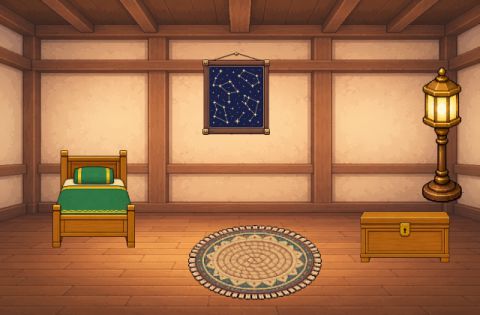
Standard dorm, lightly furnished 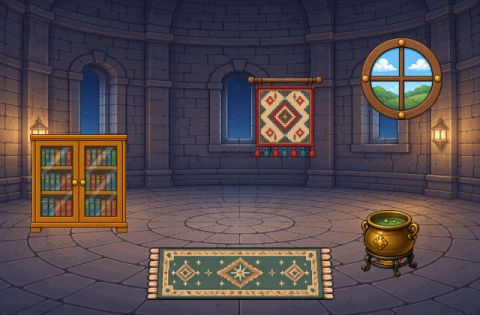
Tower Study with a cauldron corner
The rooms (7)
Each room, empty, exactly as it is sold. Walls and floor come with it; the rest is your problem.

Standard Dorm 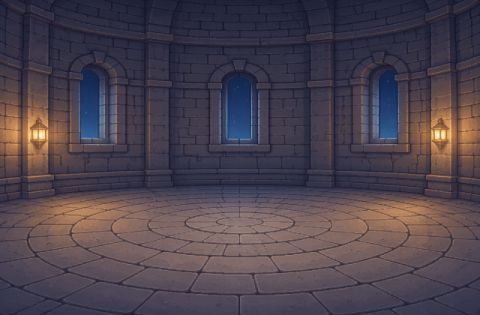
Tower Study 
Dungeon Nook 
Gryffindor Dorm 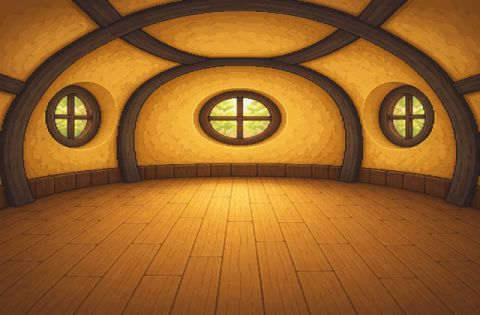
Hufflepuff Dorm 
Ravenclaw Dorm 
Slytherin Dorm
Furniture (34)
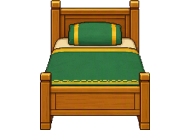
Simple Bed 
Wooden Chair 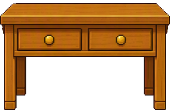
Oak Desk 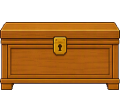
Oak Chest 
Tall Bookshelf 
Potted Fern 
Floor Lamp 
Brass Cauldron 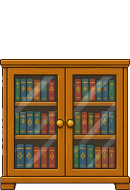
Glass-Front Bookcase 
Topiary Shrub 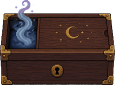
Boggart-in-a-Box 
Snow Globe: The Floating Castle 
Stormglass Barometer 
Potted Mandrake 
Traveler's Sundial 
Will-o'-Pumpkin Lantern 
Bottled Aurora 
Sunstone Paperweight 
Cider-Press Nightstand 
Hearthside Footstool 
Meadow-Jar Terrarium 
Cauldron-Ember Brazier 
Orrery Lamp 
Floating Candles 
Enchanted Aquarium 
Bubbling Cauldron 
Hourglass Tower 
Crystal Ball Stand 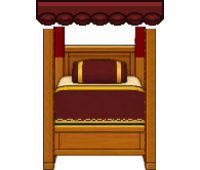
Gryffindor Four-Poster 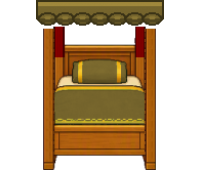
Hufflepuff Four-Poster 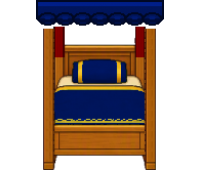
Ravenclaw Four-Poster 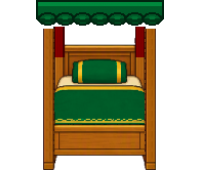
Slytherin Four-Poster 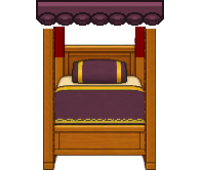
Rose Four-Poster 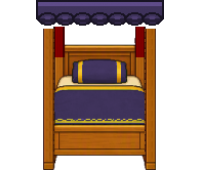
Amethyst Four-Poster
Floor decor (11)
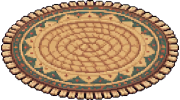
Round Rug 
Long Runner 
Gryffindor Rug 
Hufflepuff Rug 
Ravenclaw Rug 
Slytherin Rug 
Woven Rug 
Firefly-Stitched Rug 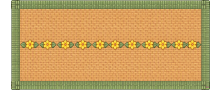
Petal-Drift Runner 
Sandtrail Mat 
Starmap Rug
Wall decor (13)

Star Poster 
Arched Window 
Gryffindor Banner 
Hufflepuff Banner 
Ravenclaw Banner 
Slytherin Banner 
Round Window 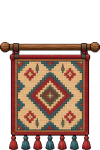
Woven Tapestry 
Frostpane Charm 
Bramble-Hook Coat Rack 
Frost-Bell Garland 
Rain-Chime Mobile 
Portrait Gallery
The Featured Shelf
Each day the Decorate panel puts a small selection of the catalog on a featured shelf, under a sign reading "back tomorrow," and each day it means it. The rotation is decided by a process the shop describes as impartial and declines to describe further; nothing on the shelf costs more or less than it does anywhere else in the catalog, so the shelf is strictly an editorial opinion. Items you already own may still appear there, at which point the shelf simply congratulates you and moves on. Checking it daily is not required. The shop merely notes that people do.
The Weekly Inspection
Once a week, a clipboard visits your dorm while you sleep and scores it out of 100. The criteria are unpublished but observable: a room with things in it outscores a room without, a room with different kinds of things outscores a wall of identical chairs, and a complete House set standing in the room, actually placed and not hoarded in storage, impresses the clipboard considerably. Your score is converted into gold and deposited without ceremony at your next new day. An empty dorm is inspected, found to be an empty dorm, and paid accordingly, which is to say nothing. Your latest grade is kept on file in the Decorate panel, in case you wish to be haunted by it.
You, Standing in It
Your avatar stands in your dorm, the same avatar you assembled in the Wardrobe, feet on the floor at the room's appointed spot, drawn at the correct depth so that furniture in front of you sits in front of you and furniture behind you does not. Change your robes and the figure in the room changes with them. The overall effect is of a person who lives somewhere, which is, administratively speaking, an illusion, but a well-composited one.
On Display
The finished room, furniture and avatar and all, is rendered as a single picture and shown on your public profile for anyone who visits, along with a running count of how many students like it and, where applicable, your last inspection grade, displayed with the neutrality of a plaque. Guests may look at your dorm, never touch it, which spares everyone the indignity of a visitor rearranging the furniture. They see the room exactly as you left it, which is either a comfort or a warning.
Should you prefer fewer witnesses, the Decorate panel offers a small chip labeled "Who can see this on your profile": Everyone (the default), Friends Only (when the Friend List is in service), or Just Me, for the fully monastic. None of this affects your own view: you go on decorating, dragging, and inspecting exactly as before; the setting only decides who else is let in on it.
Visiting, Liking, and the Guestbook
Other students' dorms are viewed on their public profile (/user/<them>), where the room is displayed. Directly beneath it, two forms of appreciation are available, both administered by the castle with its customary paperwork:
- Liking. You may like a dorm exactly once, ever. The like is recorded, counted, and displayed; it cannot be retracted, escalated, or duplicated, no matter how sincerely you press the button a second time. The ledger already knows.
- The guestbook. Every dorm keeps one. You may sign it with a note of up to 280 characters, which is displayed to subsequent visitors with your name attached, a detail worth remembering before committing anything to ink. The book accepts one entry per minute from any given quill, on the grounds that anything worth saying twice in sixty seconds probably wasn't. The last ten entries are on display; older wisdom is retired to the archive, where it rests.
You cannot like your own dorm or sign your own guestbook, a restriction the castle describes as "for your dignity" and declines to elaborate on. Be nice in other people's books: the notes are plain text, permanently attributed, and read by everyone who walks in after you.
Visitors: Open or Private
Above your own room, on your profile's edit page, sits a single switch reading "Visitors: Open". Every dorm starts Open, which is how dorms have always behaved; the switch exists so that you may decide otherwise, once, without filing anything.
Set it to Private and your room still renders for anyone who visits your profile, exactly as before. What stops is everything inbound. Specifically, and all from the one switch:
- The Like button and the guestbook form vanish for visitors, who are told only that the dorm is not receiving visitors.
- You are excluded from the Wandering Portal's list, so nobody is dropped into your room from the Forbidden Forest.
- You are excluded from haunting, so the recently deceased must find somewhere else to be atmospheric.
- You stop appearing in the daily Best Dressed display in the castle.
There is deliberately no separate opt-out for each of those. One switch governs the lot, on the reasoning that "I would rather not be visited" is a single opinion and ought to require a single decision. Existing likes and signatures are untouched; privacy stops new arrivals, it does not evict the ones already there. Flip it back to Open whenever you like, and the door is simply open again.
In Season
Some decor is seasonal: it appears in the shop only during its appointed window (a lantern in October, a garland in December) and vanishes from the shelves the rest of the year, in the manner of all respectable holiday stock. Two administrative mercies apply. First, owning is forever: anything you bought in season remains yours, placeable and displayable, in any month you like; the shop's calendar governs the selling, never the keeping. Second, nothing is retired: a seasonal piece you missed comes back around with its season, the castle having concluded that manufactured scarcity is beneath even it.
Notes
- The catalog is fixed: you place pieces the shop sells, and nothing else. There is no way to upload a picture, type a sign, or otherwise smuggle in your own content: a deliberate omission, and a load off everyone's mind.
- If your browser declines to do the dragging, the same placing and removing is available through plain links, and visitors always see your room as a single finished picture regardless of what their browser can do.
- An empty dorm is a valid lifestyle choice and displays without complaint.
- Decor tagged Giveaway Exclusive comes only from the Ministry's monthly Exclusive Giveaway. It is never in the shop and never featured on the shelf.
- The one exception to the seasonal shelf's rule above: the VIP office hands out a monthly collectible piece that, unlike seasonal decor, does not come back around if you miss it. It cannot be bought, and once claimed it stays a dorm piece for good, never movable into a club's shared clubhouse.